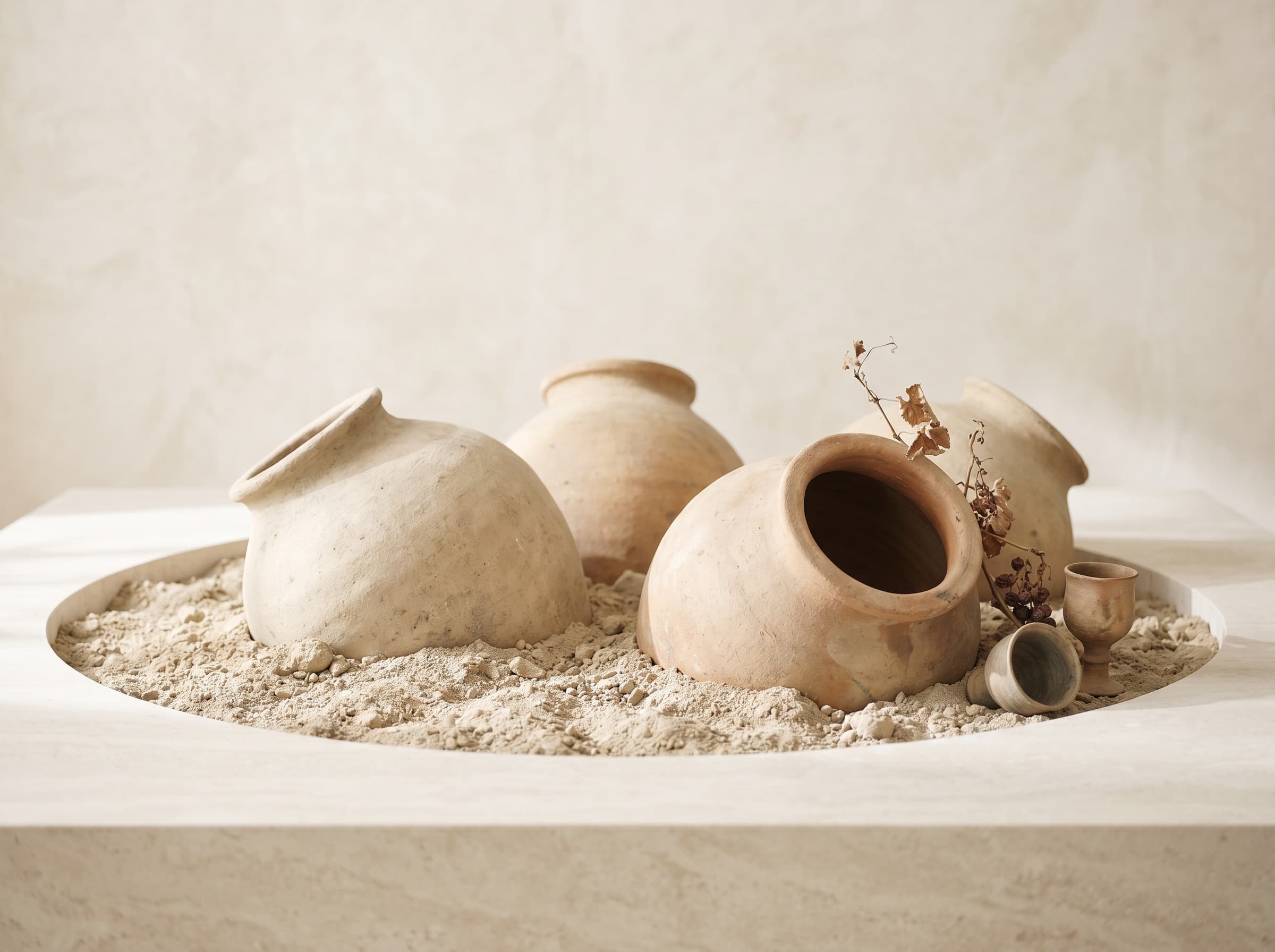
Before writing existed, before the Iron Age, and long before any named civilization kept records of what it drank, people in what is now Georgia were making wine. The 2017 publication of a landmark study in the Proceedings of the National Academy of Sciences placed that fact on solid scientific ground for the first time.3
Key Takeaways
- A 2017 study published in the Proceedings of the National Academy of Sciences confirmed Georgia as the site of the oldest known grape winemaking.3
- Archaeologists excavating Gadachrili Gora and Shulaveri Gora, south of Tbilisi, found tartaric acid residues in pottery, with the oldest wine-bearing jar dating to approximately 5,980 BC.23
- Georgia is home to more than 500 indigenous grape varieties, a legacy of thousands of years of cultivation, though only around 45 are used in commercial production today.12
- The Georgian finds predate other early winemaking evidence, including sites in Iran's Zagros Mountains (5,400 to 5,000 BC) and a cave in Armenia dated to roughly 6,000 years ago.3
- The qvevri winemaking tradition is recognized on the UNESCO Intangible Cultural Heritage list, and Kakheti, the region where this tradition is concentrated, produces about 80 percent of Georgia's wine grapes.6
What the Excavations Found
The evidence comes from two Neolithic village sites: Gadachrili Gora and Shulaveri Gora, located south of Tbilisi in a fertile river valley.23 Archaeologists from the Georgian National Museum and the University of Toronto, co-directed by Stephen Batiuk and Mindia Jalabdze, excavated clay pottery fragments from both sites and submitted them for chemical analysis.2
Patrick McGovern, an archaeologist at the University of Pennsylvania specializing in ancient beverages, identified tartaric acid residues in the sherds. Tartaric acid is a chemical marker specific to grape wine.2 That finding alone would have been significant. But the evidence converged from multiple directions: eight jars tested positive for wine residues, pottery surfaces carried decorations of grape clusters and a figure dancing, and the surrounding soil contained abundant grape pollen.23 The oldest jar with wine residue dated to approximately 5,980 BC.3
Radiocarbon dating placed activity at both sites between 5,800 BC and 6,000 BC.2 As Batiuk stated at the time, the find represents what researchers believe is the oldest known example of the domestication of a wild Eurasian grapevine for the purpose of making wine.3
How Far Back This Actually Goes
Before the Georgia study was published, the earliest confirmed grape winemaking evidence came from the Zagros Mountains of Iran, dated to between 5,400 and 5,000 BC.3 In 2011, a wine press and fermentation jars roughly 6,000 years old were found in a cave in Armenia.3 The Georgian sites push the record back by at least several centuries, and possibly more.
That caveat matters: as of the 2017 publication, archaeologists had not yet excavated the lowest, oldest layers at Gadachrili Gora.2 The dates could move further back. The site has not yet given up everything it holds.
For context on beverages more broadly, fermented drinks made from rice, honey, and fruit have been found in China dating to around 7,000 BC, predating the Georgian grape wine by about a thousand years.3 But grape wine, specifically, has its confirmed origin here.
The Chemistry and What It Tells Us
McGovern's analysis found no traces of pine resin or herbal additives in the ancient wine.2 This is worth noting carefully: the absence of detected additives suggests an early, relatively unmodified fermentation, though absence of residue is not the same as definitive proof. The grape cultivated was identified as Vitis vinifera, the European grape species still used in winemaking today.2
Because few grape seeds or stems were preserved in the village soil itself, researchers concluded that production likely took place in the surrounding hills, with the finished wine then transported to the settlements.2 The scale was not trivial: Stone Age farmers at Gadachrili Gora appear to have been producing wine in meaningful quantities.2
David Lordkipanidze, director of the Georgian National Museum and one of the research leaders, noted a detail that is easy to overlook: the large clay jars found at the site are similar in shape to the qvevri vessels still used in Georgian winemaking today.3 The morphological continuity between a Neolithic storage jar and a vessel buried in a Kakhetian cellar in the 21st century is not symbolic. It is observable.
From 6,000 BC to the Bottle in Your Hand
Georgia's claim to the oldest wine culture is not only archaeological. The country is home to more than 500 indigenous grape varieties, a figure that reflects millennia of cultivation and selection.12 Of those, around 45 are used in commercial production today.1 The qvevri winemaking method is inscribed on the UNESCO Intangible Cultural Heritage list.6 Kakheti, the eastern wine region where the bulk of production is concentrated, accounts for approximately 80 percent of the country's wine grapes.6
The varieties that trace the most direct line from that deep history are the ones grown across Kakheti's alluvial and calcareous soils today. Rkatsiteli, Georgia's most planted white grape, and Saperavi, its most planted red, represent the living continuity of that tradition.16 If you want to taste what Kakheti's Rkatsiteli produces in dry form, George is a straightforward starting point. For Saperavi from the same region, Luka shows the variety's full, tannic character. The Amber wine, made from Kisi grapes using the qvevri method, offers a direct connection to the fermentation practice that has defined Georgian wine since before recorded history.
The continuity is unusual enough to be worth sitting with. Most wine cultures have origins that are reconstructed through fragments and inference. In Georgia, the fragments go back 8,000 years, and the vessel shape has barely changed.
Frequently Asked Questions
What grape species did the ancient Georgians use?
Chemical analysis identified the grape as Vitis vinifera, the same European grape species still used in winemaking worldwide today.2
Did the ancient Georgian wine contain any additives like resin or herbs?
No, McGovern's analysis of the pottery residues found no traces of pine resin or herbal additives, suggesting a relatively unmodified fermentation process.2
What is qvevri and why does it matter to this discovery?
Qvevri is the traditional Georgian winemaking method using large clay vessels, and it is recognized on the UNESCO Intangible Cultural Heritage list.6 Researchers noted that the large clay jars found at the Neolithic sites are similar in shape to the qvevri vessels still used in Georgian cellars today, showing a direct link between ancient and modern practice.3
Which modern Georgian grape varieties connect most directly to this ancient winemaking history?
Rkatsiteli, Georgia's most planted white grape, and Saperavi, its most planted red, are considered the clearest living link to this tradition, both grown extensively across Kakheti today.16
Sources
1. Georgia: An Essential Guide to the World's Oldest Winemaking Country – Provi 2. Oldest Evidence of Winemaking Discovered at 8,000-Year-Old Village – National Geographic 3. 'World's oldest wine' found in 8,000-year-old jars in Georgia – BBC 6. Seven Fascinating Facts About The World's Oldest Winemaking Civilization – The Wine Chef