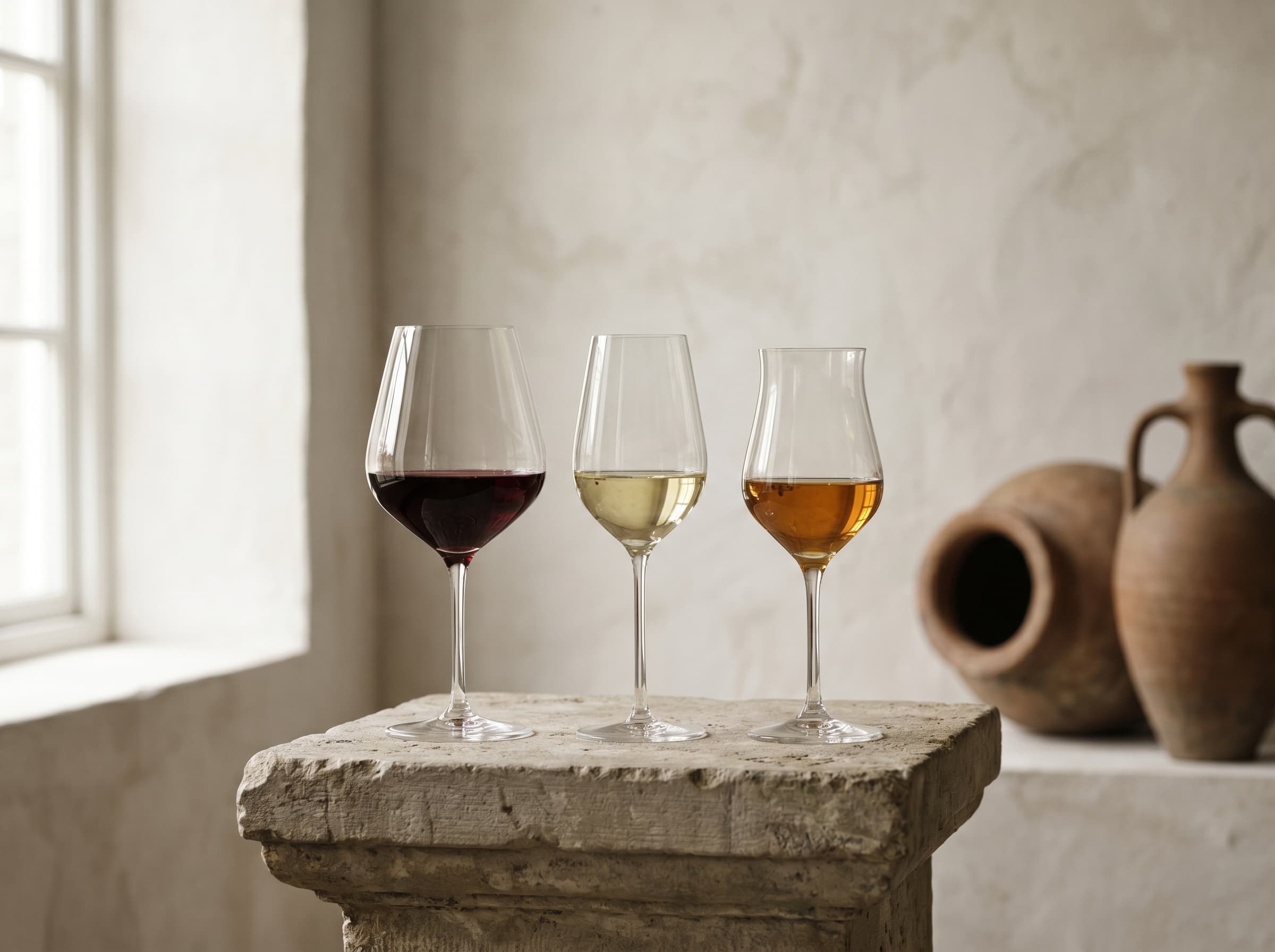
Georgian wine resists simple categorization. A dry Saperavi from Kakheti and a steel-fermented Rkatsiteli from the same region are structurally different wines, produced from the same soil, in the same country. Understanding what makes Georgian wine distinctive means understanding that the vessel, the grape, and the region each pull in their own direction.
Key Takeaways
- Georgia has over 500 indigenous grape varieties, roughly one-sixth of all known grape varieties worldwide, though only 40 to 50 are in commercial production and fewer than 25 reach export markets.12
- Qvevri, handcrafted clay vessels buried in the ground for fermentation and aging, have archaeological evidence dating back to 6,000 to 5,800 BCE, the earliest known evidence of grape winemaking anywhere.2
- UNESCO recognized the Georgian qvevri winemaking method as an Intangible Cultural Heritage in 2013, yet fewer than 10% of Georgia's wine production actually uses the method.2
- Amber wine, made by fermenting white grapes with their skins for one to six months, is described as the fastest-growing category in the Georgian wine industry.2
- Georgia's ten wine regions produce distinct styles, with Kakheti known for bold, high-acid, age-worthy wines and areas closer to the Black Sea producing lighter, more delicate results.135
The Grape as a Starting Point
Georgia is home to over 500 indigenous grape varieties, representing roughly one-sixth of the total grape varieties known to exist worldwide.12 Of those, only around 40 to 50 are currently in commercial production, and fewer than 25 reach export markets.2 That gap matters. It means most of what Georgia grows has never been tasted outside its home region.
The two varieties that define Georgia's international identity are Saperavi and Rkatsiteli. Saperavi is a teinturier grape, meaning its flesh and juice are pink rather than clear, which gives the wine an unusual depth of color and concentration.2 Its flavor profile shifts with climate: red berries in cooler areas, black fruit and spice in warmer sites, always with high acidity and firm tannins.26 If you want to explore Saperavi directly, Luka is Lanchava's dry expression from Kakheti, and Anastasia offers the same variety in a semi-sweet style.
Rkatsiteli is considered Georgia's most ancient and most planted white grape variety.2 Its name refers to the reddish-brown color its stems take on as they ripen.2 Fermented in stainless steel, it produces citrus and green apple; in qvevri, it shifts toward dried apricot, peach, and honey.5 George is Lanchava's dry, Kakheti-grown Rkatsiteli, and AI IA White is a second expression worth comparing. Kisi, a white Kakhetian variety, ripens early, holds its acidity well, and produces densely textured wines with peach and pear flower notes when fermented in qvevri.5 Lanchava's Amber is made entirely from Kisi using the qvevri method.
Other varieties round out the picture. Mtsvane is aromatic with stone fruit and vibrant acidity, often blended with Rkatsiteli.3 Saba is Lanchava's single-varietal Mtsvane from Kakheti. Krakhuna, native to Imereti, produces wines with banana and citrus character, as in Konstantin. For a look at the full range, the collection spans these varieties across multiple styles.
How the Vessel Changes Everything
The majority of Georgian wine by volume is fermented and aged in stainless steel or oak, similar to most wine-producing countries.2 The structural boldness that many drinkers associate with Georgian wine comes primarily from a different method: qvevri fermentation.
Qvevri are handcrafted clay vessels buried in the ground, used for both fermentation and maturation.2 Their use has been documented archaeologically from as far back as 6,000 to 5,800 BCE, which is the earliest known evidence of grape winemaking anywhere.2 UNESCO recognized the Georgian qvevri winemaking method as an Intangible Cultural Heritage in 2013.2
Despite this recognition, fewer than 10% of Georgia's wine production uses the qvevri method.2 But its influence is disproportionate to its volume. When white grapes are fermented in qvevri with their skins, seeds, and sometimes stems, the result is amber wine: a style with tannin structure, dried fruit character, and a texture that has no real equivalent in conventional white winemaking. Skin contact in amber production typically lasts from one to six months, depending on regional style and vintage.2 Amber wine is described as the fastest-growing category in the Georgian wine industry.2
WSST describes three amber styles: a lighter, fresher version with medium tannins; a fuller version with dried fruit and notable tannins; and a third style that adds oak aging for additional roundness.2 Amber wines typically show notes of dried orange, apricot, nuts, and honey, with tannin character that is unusual for a white wine.6 They are best served at 55 to 65 degrees Fahrenheit and pair well with food of similar intensity.6
The Kakhetian qvevri style uses larger vessels and extended skin contact; winemakers in Imereti use smaller vessels and tend toward lighter, more delicate results.3 Styles generally become lighter as you move westward from Kakheti toward the Black Sea.5
Region and Terroir
Georgia has ten distinct wine regions.1 Kakheti, in the east toward the Caspian Sea, accounts for the majority of national production and is the source of the country's most recognized wines.14 Its wines are known for robust flavor, high acidity, and strong aging potential.3
Imereti, in central Georgia, produces lighter wines and is home to varieties like Tsolikouri, Tsitska, and Krakhuna.23 Racha-Lechkhumi in the northwest is the origin of Aleksandrouli and Mujuretuli, the grapes behind Nicholas, Lanchava's semi-sweet red. The western zones closer to the Black Sea tend toward sub-tropical conditions and noticeably different structural profiles.5
This regional variation means there is no single Georgian flavor profile. The bold tannins and earthy depth often associated with Georgian wine are most accurate when describing qvevri-fermented wines and Saperavi reds. A stainless-steel Rkatsiteli or a Krakhuna from Imereti is crisp and fruit-forward, with no such weight.
Acidity, Tannin, and Why They Make Sense
Georgian cuisine is earthy, sour, and often bitter. Dishes like lobio (bean stew), pkhali (vegetable preparations with walnuts), and khinkali (soup dumplings) share a flavor language that calls for wines with structural presence rather than fruit-forward softness.1 The high acidity in both Rkatsiteli and Saperavi, and the tannin structure in amber wines, are not stylistic accidents. They are adapted to a table where the food demands a counterpoint.
This pairing logic is also the original context of the supra, Georgia's traditional feast, and the role of the tamada, the toastmaster who guides it. To read more about that tradition, the tamada page and our story give a fuller picture of how wine functions within Georgian cultural life.
Georgian wine is not defined by a single taste. It is defined by the range of choices available within a tradition that is simultaneously 8,000 years old1 and largely rebuilt since 1991.1 That combination of depth and reinvention is what makes it worth paying attention to.
Frequently Asked Questions
What is amber wine?
Amber wine is produced by fermenting white grapes in qvevri along with their skins, seeds, and sometimes stems, which gives the wine tannin structure and dried fruit character not typically found in white wine.2 It typically shows notes of dried orange, apricot, nuts, and honey, and is best served at 55 to 65 degrees Fahrenheit.6
What is the difference between Saperavi and Rkatsiteli?
Saperavi is a teinturier red grape with pink flesh and juice, producing deeply colored, high-acid, firmly tannic wines with flavors ranging from red berries to black fruit and spice depending on climate.26 Rkatsiteli is Georgia's most ancient and most planted white grape, producing citrus and green apple notes in stainless steel or dried apricot, peach, and honey when fermented in qvevri.25
Why does Georgian wine pair so well with Georgian food?
Georgian cuisine relies on earthy, sour, and bitter dishes like lobio, pkhali, and khinkali, which call for wines with structural presence rather than fruit-forward softness.1 The high acidity found in Rkatsiteli and Saperavi, along with the tannin structure of amber wines, developed as a counterpoint to this style of food rather than as a stylistic accident.1
Is all Georgian wine made in qvevri?
No. The majority of Georgian wine by volume is fermented and aged in stainless steel or oak, similar to most wine-producing countries, with qvevri accounting for less than 10% of total production despite its outsized influence on Georgia's international reputation.2
Sources
1. Georgia Wines: 8,000 Years of Tradition, A Modern Renaissance – Big Hammer Wines 2. Exploring Georgian wine: history, grape varieties, styles and amber wine – WSET Global 3. Georgian Wine: Authentic Varieties & Winemaking Traditions – Georgian Wine Shop 4. About Georgian Wines – The Georgian Wine Society 5. Get to Know Georgian Wines – Alcohol Professor 6. Georgian Wine on My Mind – The Corkscrew Concierge