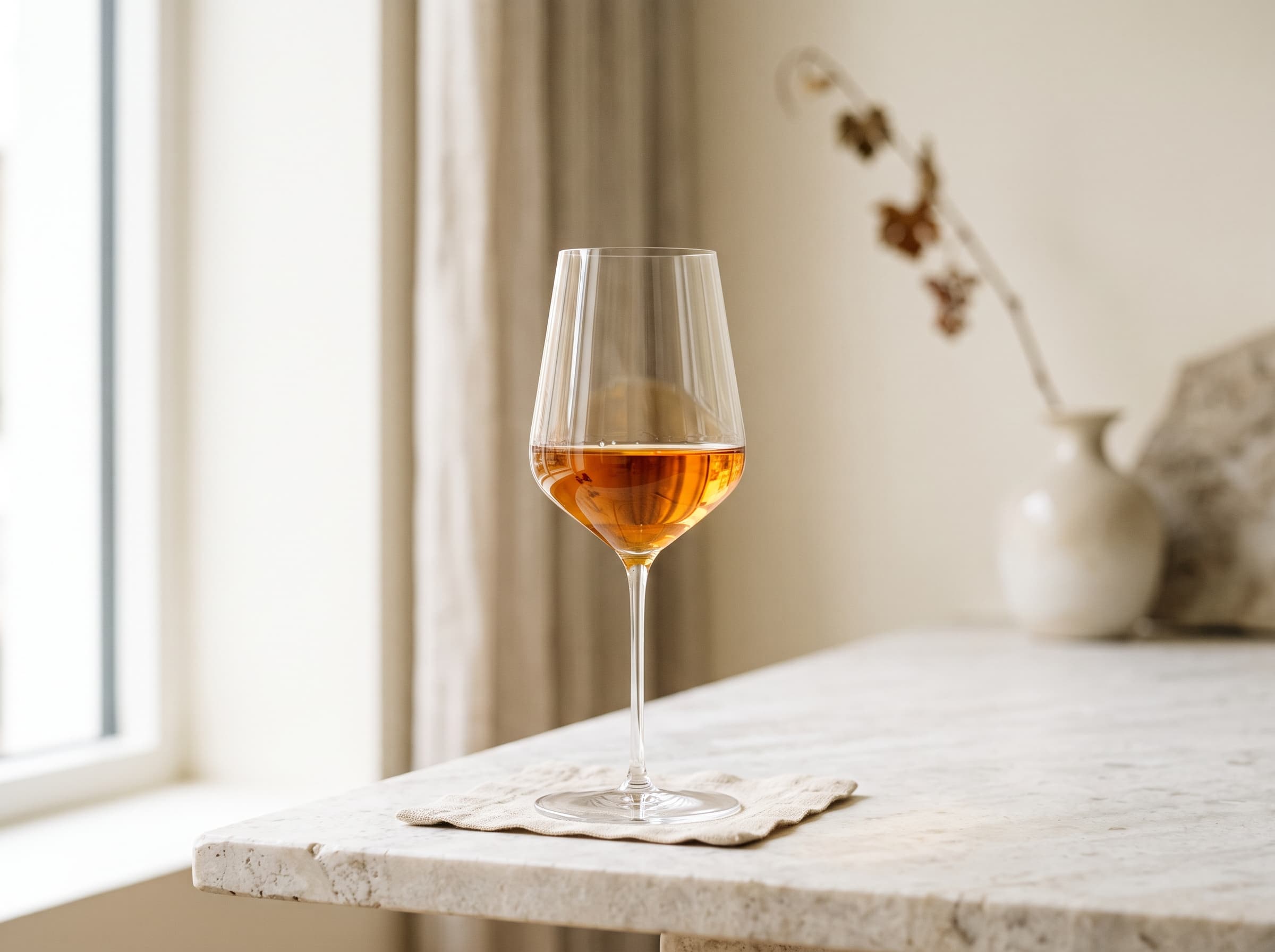
Ask whether Georgian wine is sweet or dry, and the honest answer is: it depends entirely on which bottle you're holding. The same country, the same handful of indigenous grapes, and even the same producer can move from bone-dry to lusciously sweet within a single range. That range is not an accident. It is the result of thousands of years of experimentation with grapes, vessels, and regional climate.
Key Takeaways
- Georgia produces dry, semi-dry, semi-sweet, sweet, sparkling, and fortified wines, spanning the full stylistic spectrum rather than sitting at one end of it.35
- Saperavi, Georgia's flagship red grape, is a teinturier variety used to make dry reds, sweet reds, fortified wine, and even sparkling wine.4
- Rkatsiteli, the country's most planted and oldest white grape, likewise ranges from dry to sweet, with both sparkling and fortified versions made from it.4
- Amber wine, made by fermenting white grapes on their skins, is described as the fastest-growing category in Georgian wine and moves through its own progression from lighter to fuller, oak-influenced styles.4
- Less than 10 percent of Georgian wine is made using the traditional qvevri method; most production still relies on stainless steel or oak, similar to winemaking elsewhere.4
Does Georgia make more dry wine or sweet wine?
There is no single answer, and sources disagree on emphasis. Some consumer-facing descriptions frame Georgia as known for its sweeter styles, pointing to an "off-dry and medium sweet" category as something the country is famous for.2 Other accounts describe Georgian production simply as excellent dry, semi-dry, and semi-sweet vintages, alongside sparkling wine and brandy, without singling out sweetness as the defining trait.3
This is less a contradiction than a matter of which wines get exported and talked about most. Semi-sweet reds have built a strong international reputation, but they sit alongside a much larger, quieter body of dry wine that rarely gets the same attention outside Georgia. Casual observers who encounter Georgian wine mainly through semi-sweet reds sometimes come away thinking the whole category leans sweet, when in practice the range runs from crisp and bone-dry to fully sweet and everything in between.
How can one grape make both dry and sweet wine?
Because style in Georgian winemaking is a decision made at harvest and in the cellar, not a fixed trait of the grape itself. Saperavi is a good example. It is a teinturier variety, meaning both its skin and flesh carry color, and its name is generally translated as "to dye" or "to color with".4 Winemakers use it to produce dry reds, fully sweet reds, fortified wine, and sparkling wine, depending on when the grapes are picked and how fermentation is handled.4
Rkatsiteli follows the same logic. It is Georgia's most planted and oldest white grape, and it appears in dry, sweet, sparkling, and fortified forms.4 In its modern, fresher style it shows citrus, apple, quince, and floral notes. Given extended skin contact and amber-style handling, it can shift toward marmalade, honey, caramel, white fig, stone fruit, and warm spice.4 Two wines made from Rkatsiteli, such as George and AI IA White, show how the same grape reads dry and mineral when made in a straightforward, modern style.
What is amber wine's place between dry and sweet?
Amber wine sits in its own category, defined less by sweetness and more by skin contact and structure. It is made by leaving white grape skins in contact with the juice during fermentation, a method closely tied to qvevri, the clay vessel recognized by UNESCO as an Intangible Cultural Heritage practice in 2013.4 Trade descriptions break amber wine into three progressive styles: an introductory version that is medium-bodied with fresh fruit and moderate tannins, a fuller "full-on" style with dried fruit and pronounced tannins, and an "amber combo" style that adds oak ageing on top of qvevri, producing a fuller body with dried fruit, rounded tannins, and oak character.4
Most amber wines are made dry, with the sweetness coming from ripe, dried-fruit aromatics rather than residual sugar. Amber, made from 100% Kisi using the qvevri method, is a dry example of this style: the richness comes from skin contact and texture, not sugar.
How does region shape sweet and dry styles in Georgia?
Each Georgian wine region favors different indigenous grapes, which shapes the range of styles produced there. Imereti works with white grapes like Tsolikouri, Tsitska, and Krakhuna, alongside black grapes such as Otskhanuri Sapere and Dzelshavi.4 Kartli grows Chinuri (also called Chinebuli) and Goruli Mtsvane among whites, and Tavkveri, Shavkapito, and Asuretuli Shavi among reds.4 Racha is known for the white grapes Tsulukidze (Rachuli Tetra) and Rachuli Mtsvane, and for the red grapes Aleksandrouli and Mujuretuli.4 Kakheti, Georgia's largest wine region, grows Mtsvane Kakhuri, Kisi, and Khikhvi among whites, and Budeshuri Saperavi among reds.4
Red wines overall, as a category, are described as spanning sweet, semi-sweet, dry, semi-dry, and barrel-aged styles.5 That range holds true within Kakheti alone, where dry Saperavi reds like Luka share shelf space with semi-sweet expressions like Anastasia, both made from the same grape and region but built to very different ends.
For a practical starting point, tasting across the wine collection side by side, a dry white, a dry red, an amber, and a semi-sweet, is a faster way to understand Georgia's range than reading about it. It also mirrors how wine is actually served at a Georgian supra, where multiple styles typically appear across a single table rather than one wine carrying the whole meal.
Frequently Asked Questions
Is Saperavi always a dry wine?
No. Saperavi is made in dry, sweet, fortified, and sparkling styles, depending on the producer's choices at harvest and in fermentation.4 Dry versions like Luka and AI IA Red sit alongside semi-sweet versions like Anastasia.
Is amber wine sweet?
Generally no. Amber wine's richness comes from extended skin contact, which adds tannin, texture, and dried-fruit or honeyed aromatics, not necessarily residual sugar.4 Many amber wines, including ones made from Kisi, are made in a fully dry style.
Which Georgian grape is used for semi-sweet wine?
Both Saperavi (red) and Rkatsiteli (white) are used across the full range from dry to sweet, so grape variety alone does not determine sweetness, the winemaking decision does.4 Regional black grapes like Aleksandrouli and Mujuretuli from Racha are also associated with well-known semi-sweet red styles.4
Does qvevri winemaking always produce sweet wine?
No. Qvevri is a fermentation and ageing method, used for both dry and semi-sweet wines, and for amber whites as well as reds.4 Less than 10 percent of Georgian wine overall is made this way, with the rest produced in stainless steel or oak.4
Sources
2. Georgian Wine | Wine Origins 3. Georgian Wine - Part I (YouTube) 4. Exploring Georgian wine: history, grape varieties, styles and amber wine | WSET 5. Georgian red wines